
For U.S. schools in disrepair, federal infrastructure dollars can't come soon enough
Jun 07, 2024
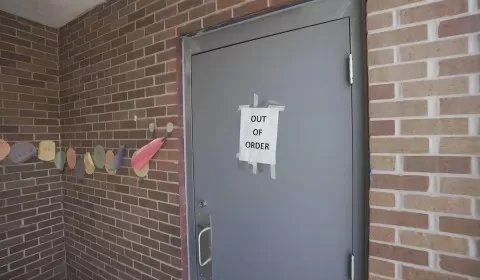
At Baker Heights Elementary, Timothy Scott is tasked with addressing a myriad of issues plaguing the school, from loose ceiling tiles to a water fountain dislodged from the wall. Despite the potential for repairs, Scott laments the lack of financial support for classroom maintenance.
Throughout the United States, the average age of public school buildings is approaching fifty years, presenting challenges for communities such as Baker that require extensive repairs. Despite the allocation of over $1 trillion by Congress in 2021 for national infrastructure revitalization, numerous schools nationwide are struggling to secure funding for vital renovations.
While the infrastructure legislation has supported over 40,000 projects nationwide, many communities, including Baker, experience delays in receiving these funds. Superintendent J.T. Stroder of Baker notes that dwindling student enrollment presents obstacles to addressing infrastructure issues, making it difficult to implement necessary improvements. Stroder emphasizes that the challenges with infrastructure extend beyond the scope of the city's educational institutions.
Stroder remarked, "Observing the community firsthand reveals the correlation between these aspects." He further emphasized, "A student's academic performance is influenced by their environment and the ambiance that surrounds them."
On a broader scale, the American Society of Civil Engineers' latest "report card" assigns a C-minus grade to the nation's infrastructure, encompassing roads, bridges, and water systems. The 21st Century School Fund estimates that an investment of $870 billion is required solely to modernize American schools and align them with current standards.
Baker Mayor Darnell Waites is intimately familiar with the challenges faced by Baker. Waites acknowledges that addressing these issues requires financial resources, stating, "Everything that I do is infrastructure, but it takes money to fix them."
Waites recognizes that there are various priorities to consider simultaneously. He explains, "There's a lot of other things that's going on at the same time. You want infrastructure, but you want to be safe." As a result, 50% of his budget is allocated to public safety, while the remaining portion is dedicated to infrastructure.
Waites explained that a significant portion of the funding for Baker's infrastructure projects is sourced from state and federal funds. Senator Bill Cassidy, a Louisiana Republican, played a crucial role in negotiating the 2021 infrastructure law.
Cassidy highlighted that during the COVID-19 pandemic, substantial financial assistance was provided to state and local educational authorities. However, he noted that when the federal government contributes funds, there is often a reduction in state and local contributions, resulting in a constant overall amount of funding.
Prior to the pandemic, numerous infrastructure issues were already present. In 2016, a devastating flood forced the local high school to close its doors. Since then, students have been attending classes in the middle school building. The impact of this situation led one student to express feeling forgotten and even ashamed to disclose which school they attended. After a lengthy wait of eight years, the water-damaged high school is finally scheduled to reopen this fall.
Another student shared their perspective, acknowledging the lack of a larger and more conducive learning environment but expressing hope for the future. Unfortunately, the slow rebuilding of hope is another significant challenge facing many American communities.